香港法院聚焦法律文件草擬問題
2025年12月10日
律師不時因使用繁冗的法律措辭而遭人嘲諷。而諷刺的是,當他們草擬的文件受到法庭審查時,各方往往不得不翻閱字典,才能釐清條文的原意。
香港法院近期審理的一宗案件 [1],便探討了這種常見於香港公司的《組織章程細則》(Articles of Association) 及《股東協議》(Shareholders Agreements,簡稱 “SHAs”) 中的文件草擬用語。[2]
Lawyers are often ridiculed for their use of elaborate language. The irony is that, when their drafting is put under scrutiny by the courts, everyone is left reaching for their dictionaries to find out what was intended in the first place.
The Hong Kong courts recently considered such a case [1], looking at commonplace drafting that is often found in Articles of Association and Shareholders Agreements (“SHAs”) of Hong Kong companies. [2]
What was the issue in dispute?
There are several stages in the process leading up to a shareholders’ meeting (or EGM). Contractual provisions in the Articles or SHA often impose requirements during that process.
In this case, the court had to consider if obligations under the Company’s Articles had been sufficiently satisfied by board members at various stages of a process leading to an EGM to remove certain directors.
What are the stages of the process?
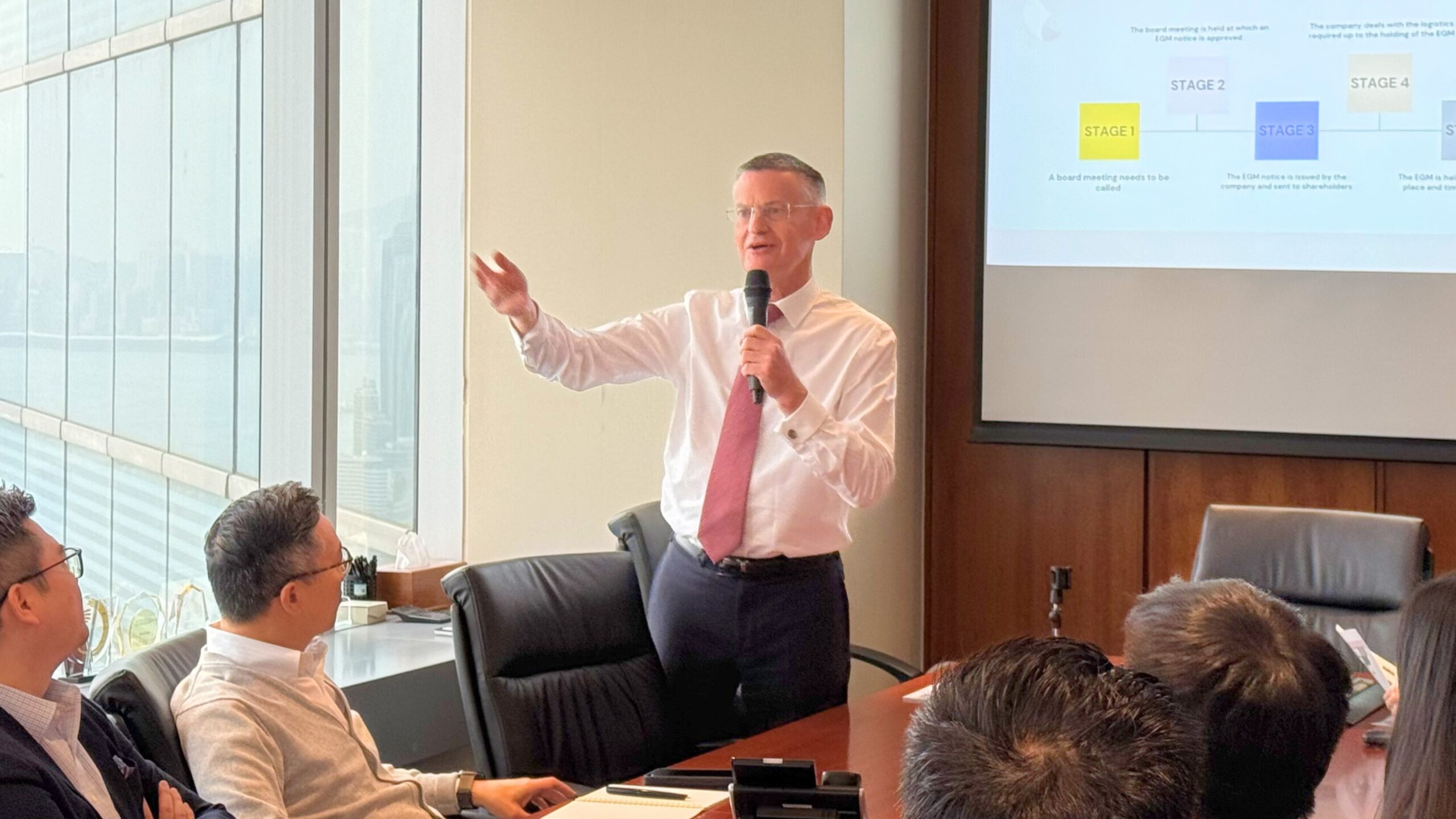
Typically, for an EGM to be held, the following are the sequential stages:
STAGE ONE — A board meeting needs to be called.
STAGE TWO — The board meeting is then held at which an EGM notice is approved.
STAGE THREE — The EGM notice is then issued by the company and sent to shareholders.
STAGE FOUR — The company deals with the logistics required up to the holding of the EGM.
STAGE FIVE — The EGM is held on the date and at the place and time specified in the EGM Notice.
What was the drafting issue?
There is a statutory duty in Hong Kong for a board “to call” an EGM where required by a certain percentage of shareholders [3], and, if they fail to do so, for the shareholders themselves to call the EGM. [4] However, the Articles of the company in this case also stated that, if the Board had failed “to proceed to convene” the EGM, the shareholders could do so.
So, essentially, the court was considering the meaning of (1) what was needed to “call” an EGM; (2) whether “to call” an EGM was different from “to convene” an EGM; and (3) how one would “proceed to convene” an EGM.
What were the findings of the court?
- Firstly, to “call” the EGM was Stage Three of the process (i.e. issuing the EGM notice).
- Secondly, to “convene” an EGM was broader than simply calling that meeting, especially as the Articles referred to both calling and convening separately. Therefore, the court believed that the two words must have different meanings. In short, the court said “convening” encompassed Stage Three and Stage Four (i.e. issuing the notice and dealing with the logistics of the meeting).
- Finally, for “proceeding to convene” the court had to revert to dictionaries [5] to try and find out what was intended by the drafting. Noting that “proceed to” was defined as “making progress” or “moving forward”, the court thought Stage One was insufficient “to proceed” as the Board might not ultimately convene the EGM and something more was needed to satisfy this duty, namely, a combination of Stages Two and Three and both authorising and issuing the notice of the EGM, showing that the Board honoured their commitment to call the EGM [6].
What’s does this case show us?
There are many expressions commonplace in the law and less so in usual English language. Whilst plain drafting does not always provide a better solution, care is needed with wording that feels as though it is more formal and legal but, in fact, exacerbates rather than solves the problem.
***
Chris Lambert
For more information or advice on holding corporate meetings or other company or commercial law matters, please contact:-
Chris Lambert | | + 852 2861 8417
Disclaimer: This publication is general in nature and is not intended to constitute legal advice. You should seek professional advice before taking any action in relation to the matters dealt with in this publication.
[1] Oriental Textile Products Ltd v Asia Television Holdings Ltd [2025] HKCFI 5387
[2] In this case, all parties accepted that, although the Articles were governed by Cayman law, the issues of interpretation were identical to those under Hong Kong law, so the Hong Kong Courts could deliver judgment on its interpretation.
[3] Section 567 of the Companies Ordinance (Cap. 622)
[4] Section 568 of the Companies Ordinance (Cap. 622). This applies where the shareholding of those calling the meeting is at least 50% of the total equity.
[5] In this case, the Oxford English and Cambridge dictionaries
[6] The court also noted that the notice had to include all necessary information of the EGM for members to attend and vote.